Tuesday, April 11, 2017

Final Project- Stefan Williams


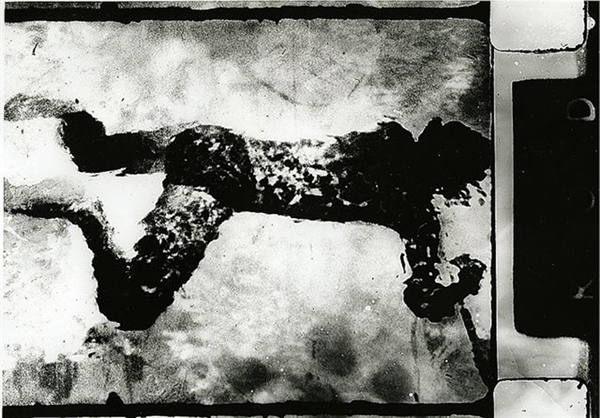
With the final project and the end of the semester approaching we have been asked to present details on our final project. As discussed in class, I would like to present a film which is fused together with music, emotion, and experimental film. Out of the numerous techniques, we have used and watched, the cynotype film process sparked a particular interest to me, especially in regards to music videos. Thus, I would like to use this process to add a certain element to my film.
            Regarding the topic of my final project, as stated above it will be a fusion of emotion, music and experimental film. I will be presenting a music video, with music from my own personal work. Although, my music is  heavily Electronic Dance Music focused, for this particular piece I am aspiring to make a song that is a more emotional in nature, and that follows a very emotional particular storyline. Thus, the music will have a large amount of orchestral elements, which account in my mind to big emotional scenes in the film. It is paramount that I follow the storyline of the song, when shooting. As the song will have a lot of emotion, the moments captured must also follow it. If I would like to make the impact which I am looking for, both the music, the film and cynotype processing must be executed correctly, which will hopefully lead to a fantastic overall piece of work!

Thursday, April 6, 2017

Response to Tom Gunning

I do not believe Gunning's theory of rejecting the original responses by spectators to the then new technology of film, such as in Lumiere's Arrival of a Train at the Station when historians recall what Gunning describes and denotes to "the myth of initial terror," in regards to audiences reactions to the portrayal of the train coming towards them on the screen.

Although I do accept that Gunning is correct in the way that this is not the sole basis for film's existence and people's fascination with it, I still also believe that the optical enhancement of film has been derived from this specific value for watching hyperrealism on a screen, and draws people in by how illusive it can be.

If that is not the case, then why is it that box offices have made fortunes from action packed movie "available in 3-D" that gives modern viewers the same thrills as spectators viewing a film for the first time? It's the sheer fact that people want to get lost in a film, and animators know people want computer graphic effects to look as realistic as possible, for the sake of falling for the illusiveness.

Yes, I also agree with Gunning that the more timeless the viewer, the more understood that it is all an illusion. Often when we are children, we believe what we watch in movies as real, until mature and grow older and realize everything is a set, that's not really a house of a flying saucer, and then if you further your education in film, you figure out how animators and set makers create these hyperrealistic movies such as Avatar. Credit is due where credit is due, and if this initial shock value was worthless, technology today would not have built on it for the viewers' pleasure.

Resources

To get Cyanotype Chemistry and D-19 developer (HIGH CONTRAST):

http://stores.photoformulary.com/the-new-cyanotype-kit/

http://stores.photoformulary.com/formulary-substitute-d-19/

For Black Leader:

http://urbanskifilm.com/supplies.html

For e6 kit:

http://www.ultrafineonline.com/ulune6fideki.html?ref=lexity&_vs=google&_vm=productsearch&gclid=CLr05_uVkNMCFQaDaQodG40NXA

For Color Reversal Film:

https://www.dwaynesphoto.com

Ken Paul Rosenthal Hand Processing Guide

http://www.kenpaulrosenthal.com/antidote.htm

Monday, March 27, 2017

A Beginner's Guide to Alchemy by Carl Brown

Those of you who might be interested in the idea of reticulation that we didn't necessarily get to see in our resulting in-class experiments might want to take a look at the link below. Filmmaker Carl Brown describes aspects of his process in some detail.


http://www.incite-online.net/brown.html


Tuesday, March 7, 2017

Reading Response 2

For the Tom Gunning reading, it was very interesting to read about the reactions and reports of the first cinematic screening. We discussed a bit in class earlier in the semester but I can see how the Luminère projections can be startling. The thing this paper made me most think about was how we could achieve this in our own work in class. The film medium is not new and has been around for a while but how can we make something that’s as jarring as the Arrival of a Train at the Station.


This thought then made me wonder what else has had this much of a reaction in present day. The only thing I can think of is virtual reality, which is nothing new but I’ve had an experience with this before with my own VR set. I have the PlayStation VR and when people try it on, they do get scared or have a over the top reaction. I don’t know if this same reaction could be done with a film since it’s such an old medium. In the past I’ve tried to do something with VR and film/video but was unsuccessful because of the technology I was able to get. Now, I built my own VR gaming rig and will soon try to get a more powerful and open sourced VR set and will try this again. Hopefully there can be a way to incorporate the physical film medium into a VR world or video and have a merge of the new technology. I’m all about mixing the old with the new.

Wednesday, February 15, 2017

Reading Response 2

What I found most fascinating from this selection of Tom Gunning was how well he assessed the psychology of audiences at different points in cinema's lifespan. It amazes me how early audiences could not possibly imagine moving pictures, yet in the modern day there are few inventions that take us by surprise in such a startling sense. Audiences' transformation from awe-struck novices to the self-supposed critics of today who frequent theaters today shows a sharp contrast. Regardless of their answer, if you ask someone if a movie is good or bad they generally have an answer. Early audiences were terror-stricken by the concept of an image of a train moving towards them - there was no chance to evaluate its merit, only to experience it.

I find that in my choreography for dance it is very easy for me to identify my audience and use that as a guidepost as to how to construct the environment. Movement is such an ancient medium that the guidepost remains fairly stable. As a dancer, when I experience incredibly emotional moments in my own life, I take keen observations of my body's reactions, and find ways to replicate them or otherwise take advantage of these fundamental human reactions. The audience will in turn react, as they have also had emotional responses throughout their lives. With film, the concept of the frame is so rooted within the public's mind that it's hard to determine which direction to lean towards in terms of letting the frame exist independently. On one hand, the cleanliness and manipulation of what lies within the frame is yet another tool in the cinematographer's grasp, yet on another, the environments should be allowed to exist freely and let their capture be genuine. I honestly don't have an answer - but perhaps it's just a question of "style."